
Claude Model Comparison 2026: Fable 5 vs Opus 4.8 vs Sonnet 5 vs Haiku 4.5 — Ultimate Guide to the Best Model
Focus keyword: Claude model comparison 2026
If you’re building AI automation workflows, selecting the right Claude model can mean the difference between a cost-effective solution and an expensive experiment. As of mid-2026, Anthropic offers four distinct Claude models—Fable 5, Opus 4.8, Sonnet 5, and Haiku 4.5—each designed for different use cases, budgets, and performance needs.
This Claude model comparison 2026 guide helps developers, no-code builders, and tech-savvy beginners understand the practical differences between these models so you can confidently choose the right one for your project.
▶ Previous tutorial : How to Get API Key and Make Your First API Call: A Beginner’s Tutorial
Who This Guide Is For
This tutorial is designed for:
- Developers integrating Claude into applications via API
- No-code builders using automation platforms like n8n with Claude
- Tech-savvy beginners exploring LLM options for personal or business projects
- Anyone trying to understand which Claude model fits their budget and requirements
You don’t need deep machine learning knowledge—just a willingness to compare features, pricing, and use cases.
Understanding the Claude AI Models Differences
For the latest official details, see Anthropic’s official documentation.
Anthropic’s Claude family has evolved significantly beyond the earlier Claude 3 and 3.5 generations. The current lineup includes four distinct models, each positioned along a spectrum from fastest and most cost-effective to most capable and premium-priced.
Think of it like choosing a vehicle: a compact car (Haiku) gets you from point A to B efficiently, a sedan (Sonnet) balances comfort and performance, a luxury SUV (Opus) handles complex terrain, and a high-performance sports car (Fable) delivers maximum capability.
According to Anthropic’s official documentation, Claude Fable 5 is described as “Anthropic’s most capable widely released model” and uses the model ID claude-fable-5 when called via API.
Complete Claude Model Comparison 2026 Overview
Here’s a quick-reference comparison to understand where each model fits:
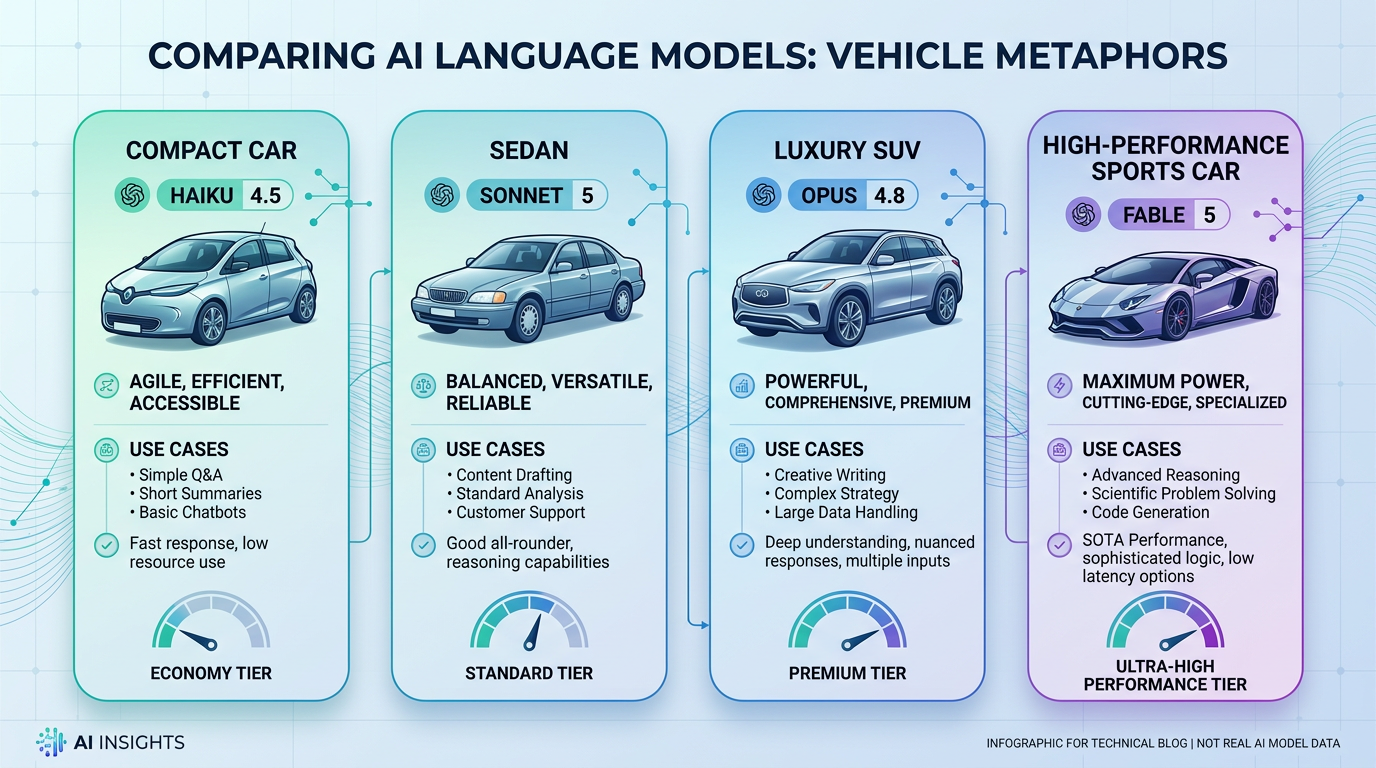
| Model | Position | Best For | Typical Scenario |
|---|---|---|---|
| Fable 5 | Most capable | Complex reasoning, research, advanced analysis | Multi-step research requiring deep synthesis |
| Opus 4.8 | High capability | Sophisticated tasks, long documents, nuanced work | Analyzing 150-page technical documents |
| Sonnet 5 | Balanced mid-tier | General-purpose tasks, good speed-quality mix | Blog post generation, customer support |
| Haiku 4.5 | Speed-optimized | High-volume, simple tasks, real-time responses | Chatbot responses, content classification |
Before making decisions based on specific technical specifications like context window sizes or exact per-token pricing, always check the official Anthropic documentation and pricing page, as these details may change.
Fable 5: Maximum Capability for Complex Tasks
Claude Fable 5 represents Anthropic’s flagship model as of June 2026. It’s designed for scenarios where quality and capability matter more than cost or speed.
When to use Fable 5:
- Multi-step research requiring synthesis across many sources
- Complex code generation with sophisticated requirements
- Advanced reasoning tasks where accuracy is critical
- Content that requires deep domain expertise
Practical example: If you’re building an automation workflow that analyzes medical research papers, identifies contradictions across studies, and generates evidence-based recommendations, Fable 5’s advanced reasoning capabilities justify the premium cost.
Limitations: Higher per-token cost means it’s not suitable for high-volume, simple tasks. Slower response times compared to Haiku or Sonnet.
Fable 5 vs Opus 4.8: Understanding the Premium Tier
Both Fable 5 and Opus 4.8 occupy the premium tier, but they serve slightly different purposes.
Opus 4.8 (released May 2026) remains a powerful option for sophisticated work. While Fable 5 is positioned as the most capable model overall, Opus 4.8 may offer a better cost-quality balance for certain advanced tasks that don’t require Fable’s absolute maximum performance.
Choosing between them:
- Choose Fable 5 when you need the absolute best performance and have the budget
- Choose Opus 4.8 when you need advanced capabilities but want to manage costs more carefully
- Test both on your specific use case if budget allows—sometimes the quality difference doesn’t justify the price jump
Before finalizing your decision, compare current pricing for both models on the official Anthropic pricing page.
Sonnet 5 Features Overview: The Balanced Choice
Claude Sonnet 5 (released June 30, 2026) represents the “sweet spot” for most developers and automation builders.
Key advantages:
- Good speed-to-quality ratio for general-purpose tasks
- More affordable than Opus or Fable while still capable
- Suitable for production workflows with moderate complexity
- Wide availability across platforms
Sonnet 5 features overview highlights:
- Handles most content generation tasks well
- Suitable for coding assistance and debugging
- Works well for customer support automation
- Good for summarization and analysis of moderate-length documents
Practical example: A content marketing workflow that generates blog post outlines, expands them into full drafts, and optimizes for SEO would work excellently with Sonnet 5. You get quality output without the premium pricing of Fable or Opus.
Best Claude model for beginners: Sonnet 5 is often the best starting point because it delivers strong performance across diverse tasks without requiring you to optimize heavily for cost or worry about capability limitations.
Haiku 4.5 Model Use Cases: Speed and Efficiency
Claude Haiku 4.5 (released October 2025) is optimized for speed and cost-effectiveness rather than maximum capability.
Haiku 4.5 model use cases include:
- Real-time chatbots where response latency matters
- Content classification processing thousands of items
- Simple extraction tasks like pulling structured data from text
- Sentiment analysis at scale
- Basic summarization of short to medium-length content
Practical example: If you’re building a customer support chatbot that handles common questions, Haiku 4.5 can process simple queries like “What are your business hours?” or “How do I reset my password?” at a fraction of the cost of premium models.
Smart strategy: Use Haiku 4.5 for 80% of simple queries and automatically escalate complex questions to Sonnet 5 or Opus 4.8. This hybrid approach can reduce costs by 60-70% while maintaining quality for difficult tasks.
Limitations: Not suitable for complex reasoning, nuanced writing, or tasks requiring deep analysis.
How to Choose the Right Claude Model for Your Project
Follow this decision framework:
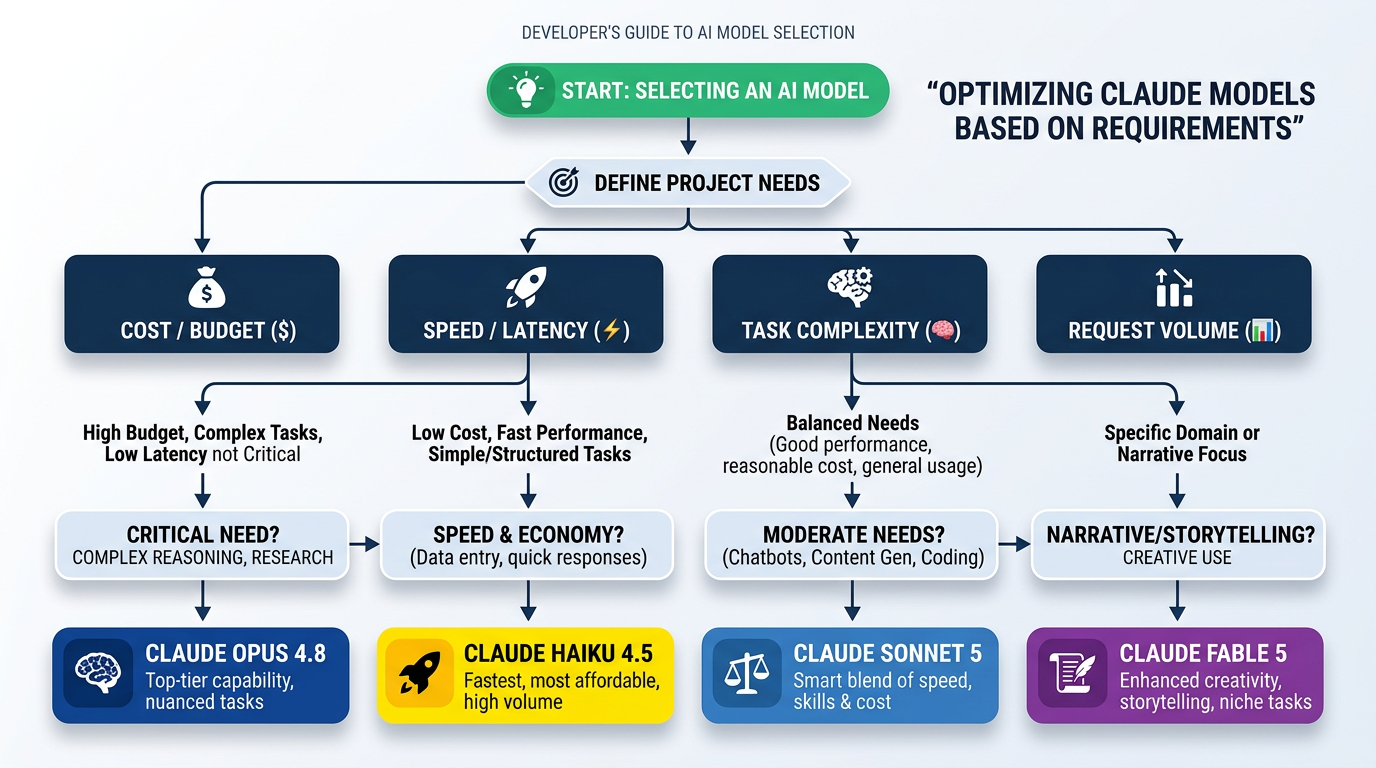
Start by defining your requirements:
- What is your primary constraint? (Cost, speed, or quality)
- How complex are your tasks? (Simple classification vs. multi-step reasoning)
- What is your expected volume? (100 requests/day vs. 100,000 requests/day)
- How important is response speed? (Real-time chat vs. batch processing)
Then match to models:
- Cost-sensitive + high volume + simple tasks → Haiku 4.5
- Balanced needs + general-purpose tasks → Sonnet 5
- Quality-critical + complex reasoning → Opus 4.8
- Maximum capability required → Fable 5
Testing approach for beginners:
- Start with Sonnet 5 for initial development
- Run sample tasks through your workflow
- If quality isn’t sufficient, test Opus 4.8 or Fable 5
- If cost is too high and tasks are simpler, test Haiku 4.5
- Compare actual costs and output quality before scaling
Common Model Selection Mistakes
Mistake 1: Always choosing the most capable model
Using Fable 5 for simple tasks like email classification wastes budget. Match model capability to task complexity.
Mistake 2: Optimizing for cost too early
Starting with Haiku 4.5 when your tasks actually need Sonnet-level capability leads to poor results and wasted development time. Optimize for working solutions first, then optimize costs.
Mistake 3: Not testing multiple models
Different tasks in your workflow may benefit from different models. A customer support system might use Haiku 4.5 for routing, Sonnet 5 for responses, and Opus 4.8 for escalations.
Mistake 4: Ignoring context window requirements
Some tasks require processing large amounts of text at once. Before committing to a model, verify that its context window supports your use case in the official model documentation.
Mistake 5: Forgetting to monitor costs in production
Set up usage tracking and cost alerts when you deploy. Model costs can scale quickly with production traffic.
Getting Started with Your Chosen Claude Model
Once you’ve selected a model, here’s how to begin:
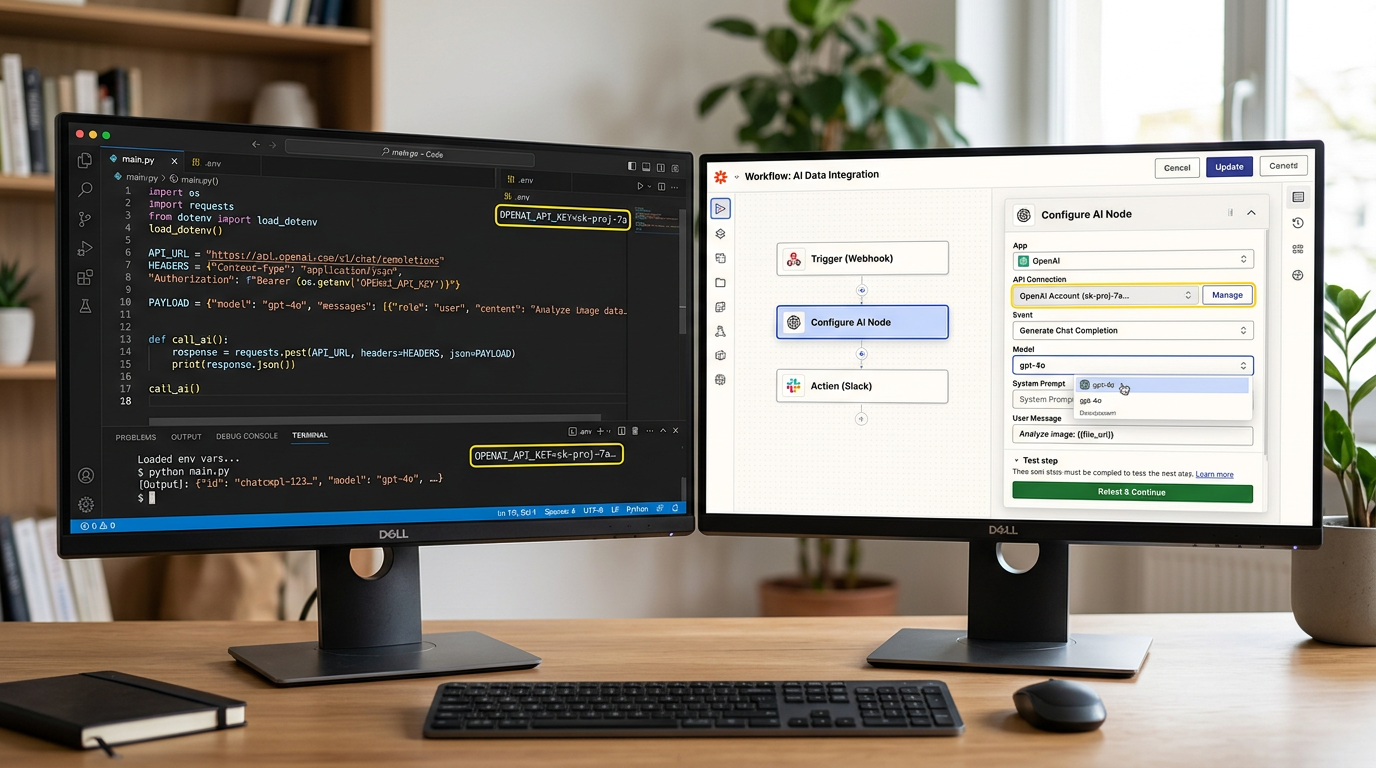
For API users:
- Create an Anthropic account and generate an API key
- Review the official API reference to understand request formatting
- Use the specific model ID in your API calls (e.g.,
claude-fable-5for Fable 5) - Start with small test batches before scaling
- Monitor usage and costs through your Anthropic dashboard
For no-code builders (like n8n):
- Add the Anthropic/Claude node to your workflow
- Configure your API credentials
- Select your chosen model from the dropdown
- Build your automation logic around the Claude node
- Test thoroughly with real examples before deploying
For developers using SDKs:
Install the official Anthropic SDK for your programming language and reference the quickstart documentation. Make sure you’re using a compatible SDK version that supports the latest 2026 models.
Frequently Asked Questions
Can I switch between models easily in my workflow?
Yes. The API structure is consistent across models—you simply change the model ID parameter. This makes it easy to A/B test or implement hybrid approaches.
Do all models support the same features (vision, tool use, etc.)?
Capabilities may vary between model tiers. Check the official models overview documentation for feature availability across Fable 5, Opus 4.8, Sonnet 5, and Haiku 4.5.
How do I estimate my monthly costs?
Multiply your expected monthly token usage (input + output) by the per-token pricing for your chosen model. The official Anthropic pricing page provides current rates and often includes cost calculators.
What happens if a model is updated or deprecated?
Anthropic typically maintains backward compatibility and provides migration guides. Monitor the official changelog and announcements for version updates.
Can I use multiple models in the same application?
Absolutely. Many production systems use different models for different tasks—this is often the most cost-effective approach.
Conclusion: Making Your Claude Model Comparison Decision in 2026
Understanding the Claude model comparison 2026 landscape empowers you to make informed decisions about which model fits your automation workflow, budget, and quality requirements.
Key takeaways:
- Fable 5 delivers maximum capability for complex reasoning tasks
- Opus 4.8 offers advanced performance with more cost flexibility
- Sonnet 5 provides the best balance for general-purpose work
- Haiku 4.5 excels at high-volume, speed-critical tasks
The best Claude model for beginners is typically Sonnet 5—it lets you build working solutions without cost anxiety or capability limitations.
Your next step: Choose one model based on the decision framework above, set up a small test project, and evaluate real performance with your actual use case. You can always adjust later.
Before making final decisions on pricing or technical specifications, verify current details on the official Anthropic documentation and pricing pages, as model features and costs may be updated.
Enjoyed this article?